The Villain Who Was Right: On Antagonists as Tragedy
The simplest antagonist in romantic fantasy is a force of opposition — something that wants the protagonists to fail, for reasons that are either self-explanatory or irrelevant. It exists to create obstacles. Its inner life doesn’t complicate the story; it provides the story with a convenient direction.
A more sophisticated antagonist has a comprehensible motivation — usually a selfish one, or a misguided one, that the reader can follow even while disagreeing. We understand why they do what they do, even as we want them stopped.
The hardest antagonist to write, and the most resonant when it works, is the one who is not wrong. Whose read of the world is accurate. Whose diagnosis of the protagonists’ situation is correct. Who is only wrong about one specific thing — the conclusion they drew from what they correctly understood — and who arrived at that wrong conclusion through accumulated loss that the reader is made to understand as inevitable.
This antagonist cannot be defeated. It can only be understood. And understanding it is, in some ways, more devastating than any confrontation.
What Avar Actually Is
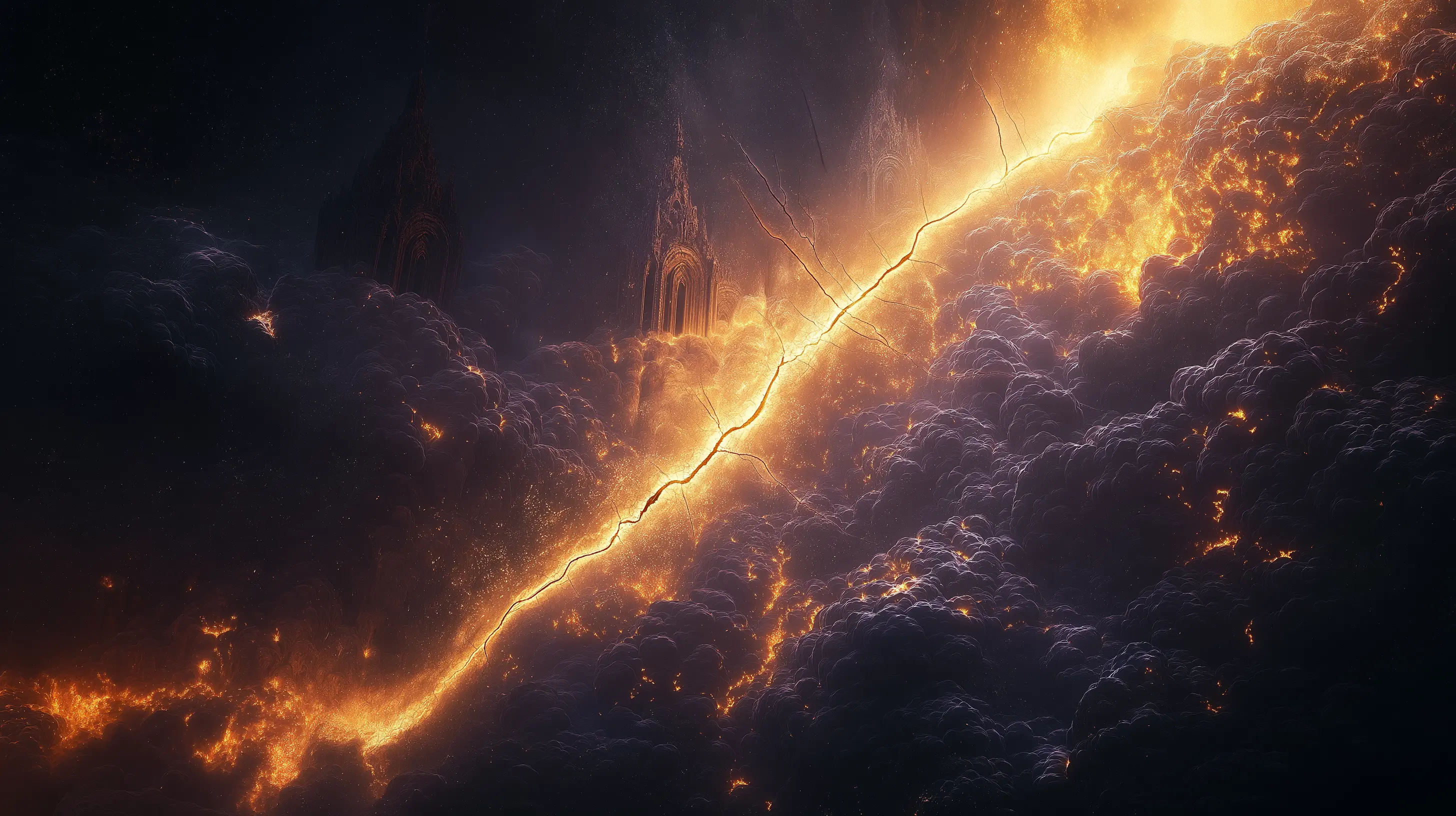
Avar in The Moon’s Shadow is not introduced as a monster. He is introduced as a measured, precise man of extraordinary age — silver-haired, in the formal garments of the old Celestial order — whose presence produces a specific uncanny quality: when he speaks, words reach the listener a fraction of a second after his lips move. Language decoupling from meaning. Entropy manifesting not as destruction but as the progressive silencing of everything in his vicinity.
He does not attack the Cathedral. He speaks through its walls. When he makes first contact with Kael — specifically as an Unmaker, addressing one through another — his initial approach is not monstrous. It is almost compassionate. He offers the one thing Kael has never been offered directly: validation. He knows what it is to be an Unmaker. He knows the grief-quality. He knows what it is to be too much for everyone who gets close. He tells Kael he has been where Kael is, and he knows how this ends.
The implication is not a threat. It is a warning. From someone who knows.
The disturbing thing about this scene is that Avar is right about the past. The question the novel holds open, carefully, is whether he is right about the future.
The Mosaic’s Revelation
Chapter Twenty-Eight activates the Memory Mosaic at full capacity and shows Kael and Selene the complete record of the Sundering. What they see is not a villain’s conquest. It is something harder.
Avar was a legitimate Celestial Architect before the events of the novel — one of the oldest, assigned to the Tenth Realm. Over centuries of accumulated loss and betrayal by the Celestial hierarchy, he became the host of Existential Entropy. He did not choose entropy out of nihilism. He chose it out of grief. He loved someone, once, and the Celestial authorities removed that love under the same Sacred Law now threatening Kael and Selene. He had experienced firsthand what the hierarchy was willing to do to protect its written laws. He knew what was coming for them.
The Mosaic shows him discovering Kael and Selene’s Forged Love during a routine survey of the Seventh Realm. Reading the Glyph signature of their bond. Bringing it to the High Celestial Council. The Council ordering the bond broken. And then it shows his face as he administers the Sundering.
He is not performing duty. He is destroying himself with every second of it.
After: sitting in the wreckage of the Seventh Realm, surrounded by cascading damage across hundreds of Realms, speaking a Glyph into the Wound Gallery’s wall. He is placing the Glyph of Negation — the only tool capable of contesting the Sacred Laws — in the one place where Kael and Selene would eventually find it. He could not undo what he had done. He could give them the means to prevent it from ever being done again.
Then he walked into Entropy and let it take him. The guilt of what he had done was more than what remained of his soul weight. He administered the thing that destroyed the people he could not protect, and he could not survive that knowledge, and the Entropy was there and waiting.
He is not a villain who went wrong out of selfishness or ideology. He is someone who was shaped by the same system that shaped Kael and Selene, who suffered the same loss, and who made a different choice when it mattered — not a brave one, not a cowardly one, but the choice of a being already so far consumed by guilt that resistance had become impossible. And then, afterward, tried to make it mean something by leaving them a door.
The Conversation in Chapter Thirty-Two
When Kael speaks to Avar directly, the Entropy has consumed most of what Avar was. The man is still present inside it, but barely — the way an ember remains in ash long after the fire that generated it has been out for hours.
Kael does not approach him as an enemy. He approaches him as the one being in existence who has had the same experience. He tells Avar that the Mosaic showed them everything. That they know what he did and they know why.
Avar’s response is not gratitude and not violence. It is the specific quality of someone who has been holding a weight so long they’ve forgotten what their hands felt like without it. He does not believe he can be freed. Freedom has become abstract to him — like warmth to a person who has been cold for decades. He cannot feel what it would feel like.
Kael makes the case for a being who has given up on his own case. This is the most direct articulation of the novel’s thematic center: that brokenness is not permanent architecture. That grief-nature can be redirected. That what you unmake can also be unmade.
He says: “I know the feeling exactly. I was wrong. So are you.”
The line works because by Chapter Thirty-Two, the reader understands what it cost Kael to say it. He has spent the whole novel believing the same thing Avar believes. The difference is that he changed. He is standing in front of the evidence of what he almost became, asking it to do the same.
What Release Looks Like Instead of Redemption
The Glyph of Negation, directed at the specific Sacred Law that removed Avar’s agency — the law that made refusal impossible, that made his compliance with the Council’s order mandatory — retroactively reaches back through time and makes it a moment he could have said no.
In the present, this removes the foundational guilt-architecture the Entropy has been feeding on. The guilt dissolves. The Entropy collapses inward without the grief sustaining it.
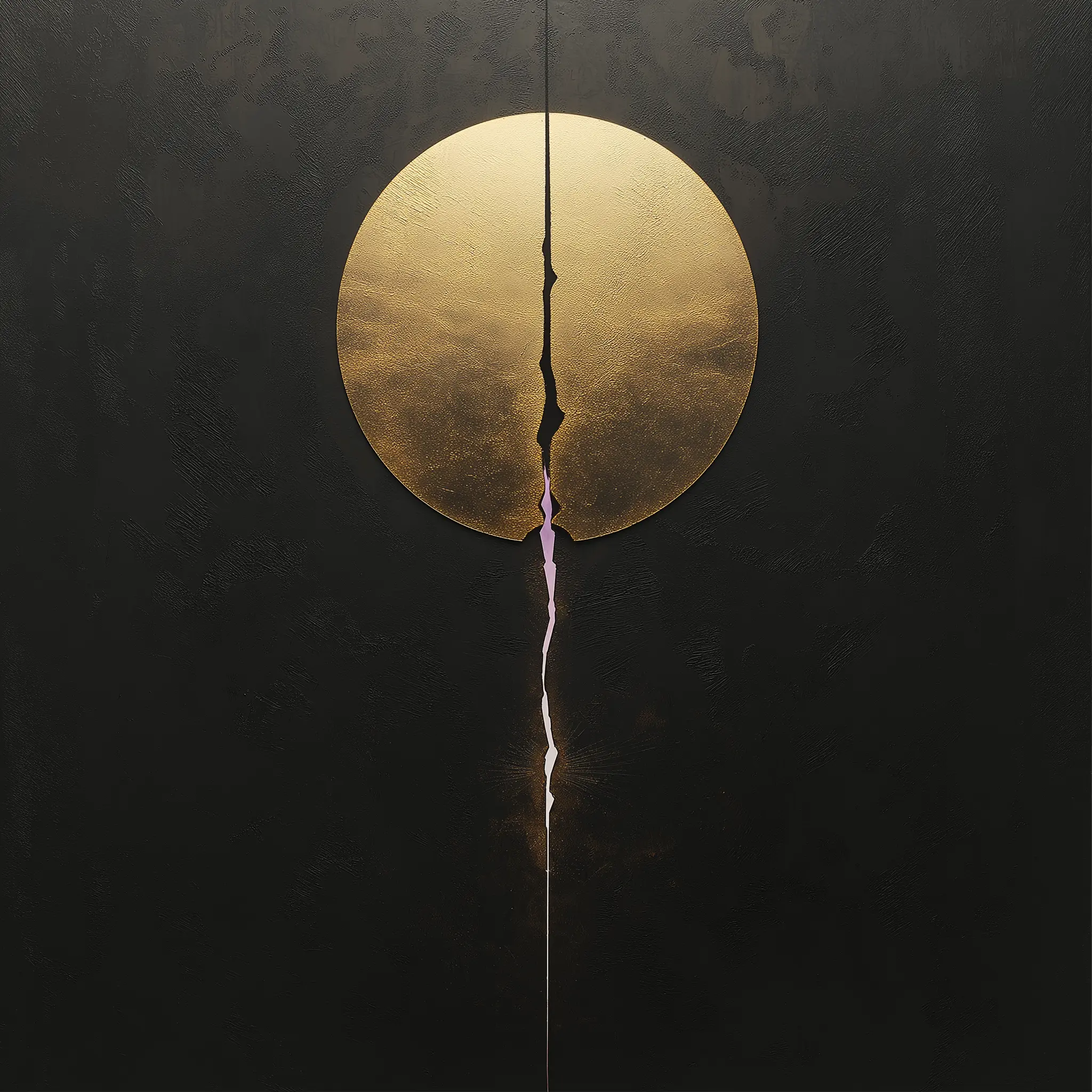
Avar does not survive the release. He was too far consumed. What is freed is not a person who continues but a person who ends as themselves — with their name, with their grief, with the last Glyph they speak before they go, which Selene reads.
It translates to something like: I am sorry I could not fix what I helped break.
She carries it. Filed with the one hundred and fourteen colors of the Ashfields sky. The archive of things too important to put down.
This is what the novel offers instead of a villain’s defeat: understanding, release, and the specific, quiet dignity of ending as yourself rather than as what you became. Avar does not survive to Book Two. But he does not end as a monster. He ends as the tragedy the story built him to be — a person who was shaped by the same system that tried to destroy Kael and Selene, who could not find the same path out, who left them the door anyway, who could not walk through it himself.
The antagonist who is right about almost everything is not the antagonist you defeat. It is the antagonist you mourn.