
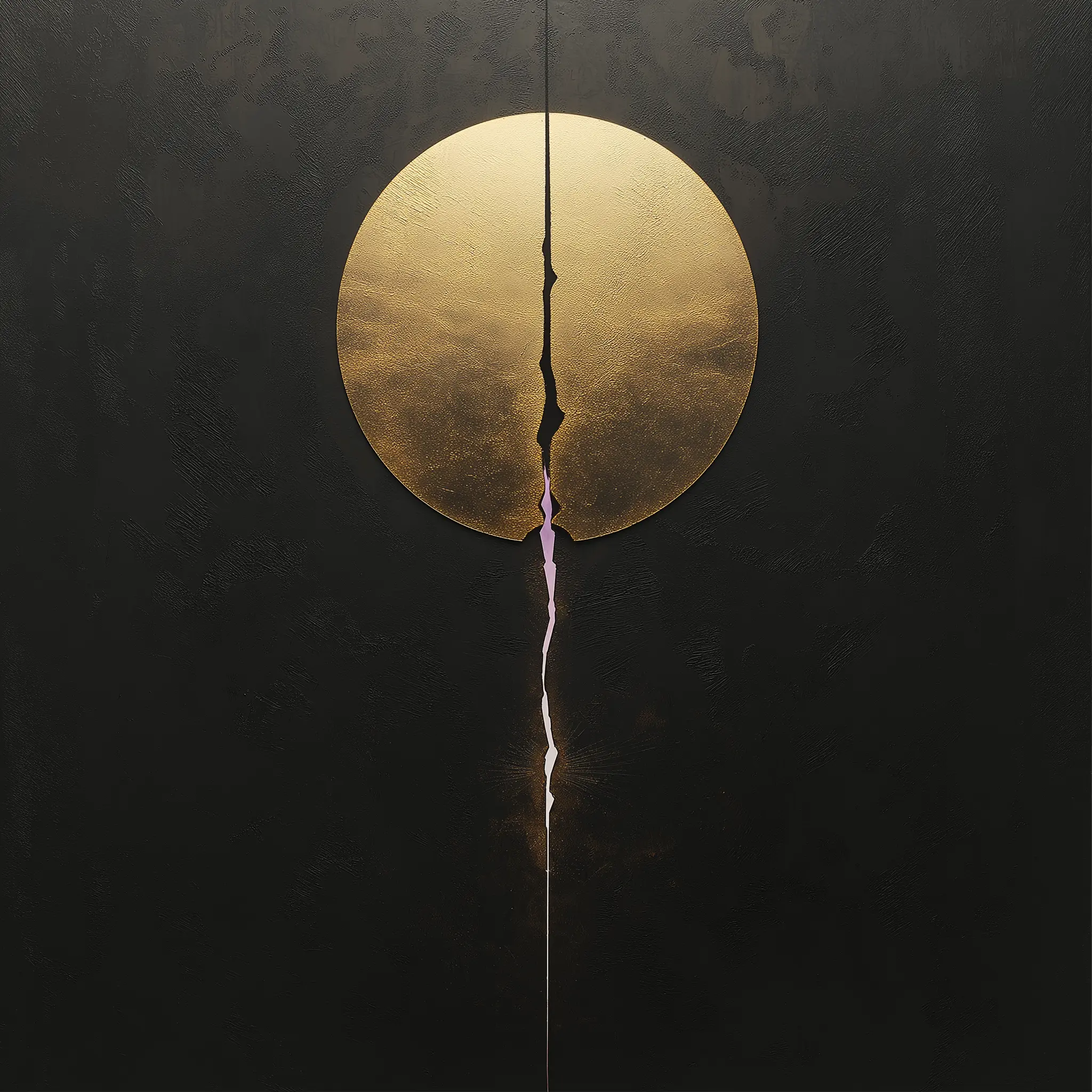
Choosing Again: On the Recovery Love Story
Falling in love for the first time requires very little courage. You don’t know the cost yet. The risk is abstract. You can convince yourself it’ll be fine because you have no specific evidence to the contrary, and hope — in the absence of data — is cheap.
Choosing someone again, after you’ve already been destroyed by them and have spent years rebuilding yourself around the shape of their absence — that requires something different. You know the cost. Not in the abstract. In the exact, specific terms of what you lost and what it took to survive it. And you choose anyway.
This is the recovery love story. It is rarer than first love in romantic fiction, considerably harder to execute, and when it lands it hits at a register that a first love story simply cannot reach. The devastation is of a different order: not the excitement of something new but the weight of something chosen with full knowledge.
The Moon’s Shadow is a recovery love story. That was the first structural decision, and everything else follows from it.
What First Love Cannot Do
First love in romantic fiction has a particular emotional shape. Discovery. Escalation. The gradual accumulation of intimacy from zero. Barriers that feel large because neither person yet knows what they’re capable of surviving. The genre has refined this shape for centuries and can execute it with extraordinary skill.
What it cannot do is carry the specific weight of two people who have already been through everything together. Who know each other’s tells. Who have watched each other at their worst and worst-adjacent and somewhere-past-worst. Who have had the relationship destroyed and spent the years since in the wreckage of it, maintaining the wreckage because neither can stop.
Kael and Selene begin the novel in forty-three years of careful, precise separation. They know each other with the intimacy of former partners — which is a different and more unsettling kind of knowledge than the intimacy of people discovering each other. He knows her research days and routes his maintenance work around them. She adjusts her corridors to avoid his mapping patterns. They have been living in orbit around each other’s absence for decades with the discipline of people who cannot afford to close the gap.
That discipline — the maintenance of the distance — is itself the evidence of everything that existed before. You don’t structure your entire existence around the avoidance of someone you’re indifferent to. The avoidance takes this much effort because what it’s managing is this large.
A first love story can show you two people moving toward each other. A recovery story shows you two people who never fully stopped and have been expending enormous energy pretending otherwise.
The Specific Weight of Known Cost
The romance Beat Map for The Moon’s Shadow is organized around one principle: every step toward each other must be made with increasing knowledge of the cost. Not decreasing — increasing.
As Kael and Selene move closer over the course of the novel, they accumulate more information about what happened to them and why. They watch the Mosaic show them their shared past. They learn the full truth of the Sundering — who administered it, why, what it cost the 735 Realms that were destroyed in its wake. By the time they reach the confession, they have seen every piece of what was done to them and what it destroyed.
The confession is not made in ignorance. It’s made with complete information.
“I would choose you again, knowing everything” is a different declaration than “I love you.” It’s the formulation that can only exist in a recovery love story, because you can only know everything after you’ve been through it. First love doesn’t have access to this sentence. It hasn’t earned it yet.
The weight of “knowing everything” is the weight of all the chapters that preceded the declaration. The rupture, where Selene weaponizes what Kael told her about himself in a moment of unguarded honesty. The long chapters of separation where both of them live inside the aftermath. The slow, deliberate work of repair — not dramatic reconciliation but the specific small choices that start to rebuild something, one session at a time, one honest conversation at a time.
Every beat in the romance is structured so that when the confession arrives, the reader has been made to feel the exact weight of what “everything” contains. Not told. Made to feel.
Why Recovery Requires Becoming Different
First love stories require characters to open up — to let someone in they would have kept out. This is the standard arc. The walls come down, vulnerability is exchanged, love becomes possible.
Recovery love stories require something more specific: the characters have to become structurally different. The patterns that made them hurt each other — or that made them unable to receive what the other was offering — have to be identified, examined, and dismantled. Not overcome. Dismantled. You cannot recover a relationship by trying harder at the same patterns. You have to change the patterns.
Kael’s pattern is withdrawal. He anticipates rejection and pre-empts it by leaving first. He expresses care through prevention rather than presence. He decides what other people can handle on their behalf, then manages the situation at a distance so they don’t have to encounter him. Forty-three years of three wings of distance is this pattern running at scale.
The Reverse Prophecy activation — when he breaks this pattern for the first time — is not romantic in the traditional sense. He goes to find Selene after damaging her work and tells her what he did, rather than writing a note that explains the structural damage without mentioning his role. It is a small thing. It is the smallest possible version of a different choice. But it is evidence that the pattern has cracked enough for something else to come through, and in a recovery love story, that crack is everything.
Selene’s pattern is performance. She gives preemptively, from fear of abandonment. Her compassion was a survival strategy before it was a virtue: if she is useful enough, indispensable enough, she will not be discarded. When she enters deficit and loses the effortless warmth of her Maker nature, she loses the mechanism she was using to justify her existence. The restoration of her compassion — in Chapter 26, after sitting with Maren in the Ashfields and listening without solving — is the restoration of a different kind: not the performed compassion of someone afraid, but the quieter recognition of another person’s pain as real and worth accompanying.
The recovery love story asks both characters to change in specific ways that attack their specific wounds. It is not the first love story’s opening up. It is the harder work of taking apart what you built to survive without the other person, and learning to exist without those structures.
Choosing With Full Knowledge
The last thing a recovery love story must do — and where it most often fails in execution — is demonstrate that the choice is made with full knowledge of the cost. Not in spite of the cost. Not after the cost is somehow minimized. With the cost fully visible, fully understood, and factored into the choice.
The cost in The Moon’s Shadow is exact. Both characters permanently lose something essential to their nature — specific things, the things each of them was using to justify their worth. They make this choice, collectively, with complete information about what it will take from them. Neither flinches.
This is the recovery love story’s defining beat. Not the moment they admit they love each other. The moment they choose each other knowing exactly what that means. The acknowledgment that the destruction is real, the cost is real, and the choice is made anyway.
That’s the formulation no first love story can access. That’s what the recovery love story, at its best, is for.