There is a kind of fantasy world-building that works by accumulation. Take a mythology that already exists, add a naming convention, change the cosmological colors. The result is recognizable to readers because it was assembled from familiar parts. It is not built. It is curated.
A world that feels earned is different. It has internal physics. Its rules generate consequences that the plot cannot avoid. The characters cannot sidestep the cosmology because the cosmology is the terrain.
The Moon’s Shadow was built from a single structural question: what if the physics of a universe were emotional? What if creation and destruction were not just forces but a relationship, and the health of that relationship determined whether existence held together?
The universe is a multiverse of 777 Realms, each one generated and sustained by a pair of Celestial Architects, a Maker and an Unmaker assigned at the moment of cosmic inception. Creation requires both forces in productive tension. Too much making produces stagnation: reality crystallizes, perfect and inert. Too much unmaking produces dissolution: reality thins into void. The Architects keep the balance. This is not metaphor within the world’s logic. This is physics.
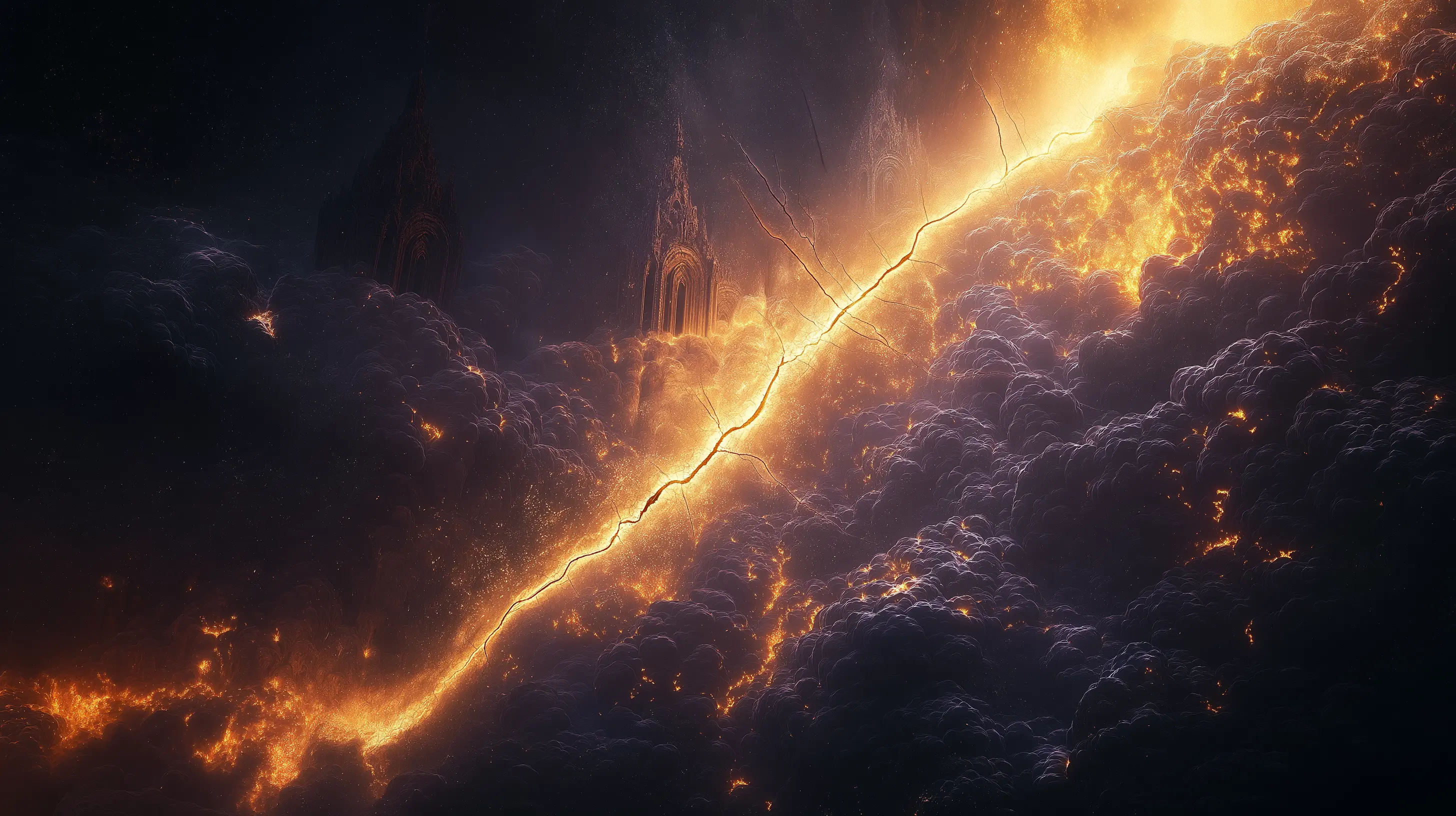
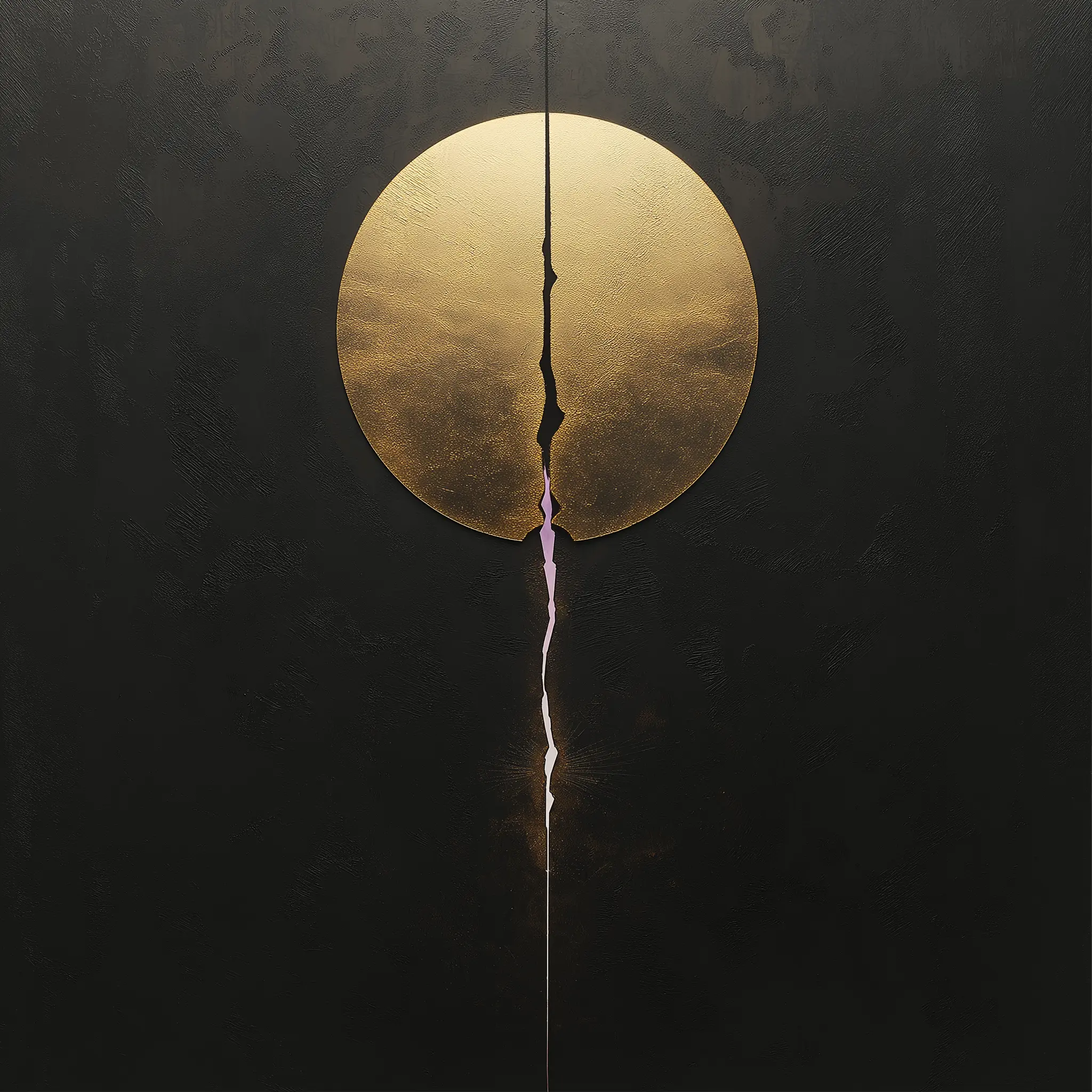
The immediate consequence of this system is that every pair of Architects is, structurally, a relationship. Their ability to do their work depends on their ability to function together. Kael and Selene were among the eldest Architect pairs, assigned to the Seventh Realm, the most complex and beloved reality in the multiverse. When their bond fractured, the fracture was not private. It propagated outward like a crack in glass, destabilizing hundreds of Realms and triggering a cascade collapse. The Old Cosmos of 777 Realms is now forty-two surviving realities, most barely coherent.
The Sundering Event is the book’s central wound. It is also the logical result of the physics. If Maker and Unmaker forces require a functioning partnership to maintain a Realm, then a broken partnership destroys a Realm. Kael and Selene’s fracture was big enough to destroy hundreds of them.
The Sacred Laws exist because the Celestial authorities understood this physics and were afraid of one implication in particular.
Sacred Law I: Makers and Unmakers must never bond beyond function. Sacred Law V: Forged Love, love that rewrites the fabric of a Realm, is forbidden. The official reason given for these prohibitions was stability. Forged Love, the authorities claimed, destabilized Realms. This is half-true.
The full truth, which the novel reveals late: Forged Love generates Prime Resonance, the only force capable of rewriting the Glyph Language at its foundational level. The Glyph Language is the original code of existence, written before the Architect system existed, programming underneath every Celestial Law. A Forged Love pair could, in principle, rewrite the fundamental laws of existence itself, including the laws that keep the Celestial hierarchy in power.
The prohibition was not about protecting existence. It was about protecting the people who had written the rules.
This means the Sacred Laws are load-bearing in a very specific way. They are not decoration. They are not world-flavor. They are the mechanism by which a governing class maintains control. The entire romance plot, the entire question of whether Kael and Selene can choose each other again, runs directly through this architecture. The love is forbidden because the love, at full force, is the only weapon that could dismantle the hierarchy’s power over them.
You cannot remove the Sacred Laws without removing the stakes of the romance. You cannot remove the romance without collapsing the political architecture of the cosmology. The world-building and the love story are not parallel tracks. They are the same track.
The Soul Economy gives the cosmology material weight.
All magic has a cost payable in Soul Weight, a quantifiable mass of divine essence. Every act of power burns it. Soul Weight regenerates slowly during rest, and faster in the presence of a bonded Architect partner. Kael and Selene are each other’s most efficient regeneration source, which means that their separation is not only emotionally costly but physically depleting. They have been spending themselves alone for forty-three years. Both of them are running at deficit.
The Deficit State matters narratively because of what it does to a person. Below a critical threshold, an Architect begins to lose essential attributes: first memories, then emotions, then sense of self. Selene’s fading compassion in the novel is not a character flaw. It is a symptom. She is running out of herself because she has been sustaining alone what was designed to be shared.
Kael recognizes the symptoms because he has been living inside a version of them for centuries. His careful distance, his clinical attention, his precision without warmth, what he calls discipline, the novel slowly reveals to be the presentation of long-term deficit spending. He normalized it. He gave it a different name.
When Selene starts to present the same way, he recognizes her because he has been looking at himself in a mirror for decades without admitting it.
A mythology earns itself when you cannot swap out its pieces for generic alternatives without the story falling apart.
Replace the Soul Economy with any other magic system and the emotional logic of their separation collapses. Replace the Sacred Laws with arbitrary prohibition and the political stakes of the romance disappear. Replace the Scar Cathedral with any other setting and you lose the third presence in every scene, the building that is literally made of what they did to each other.
The cosmology is the story. The story is the cosmology. That is what first principles looks like when it works.