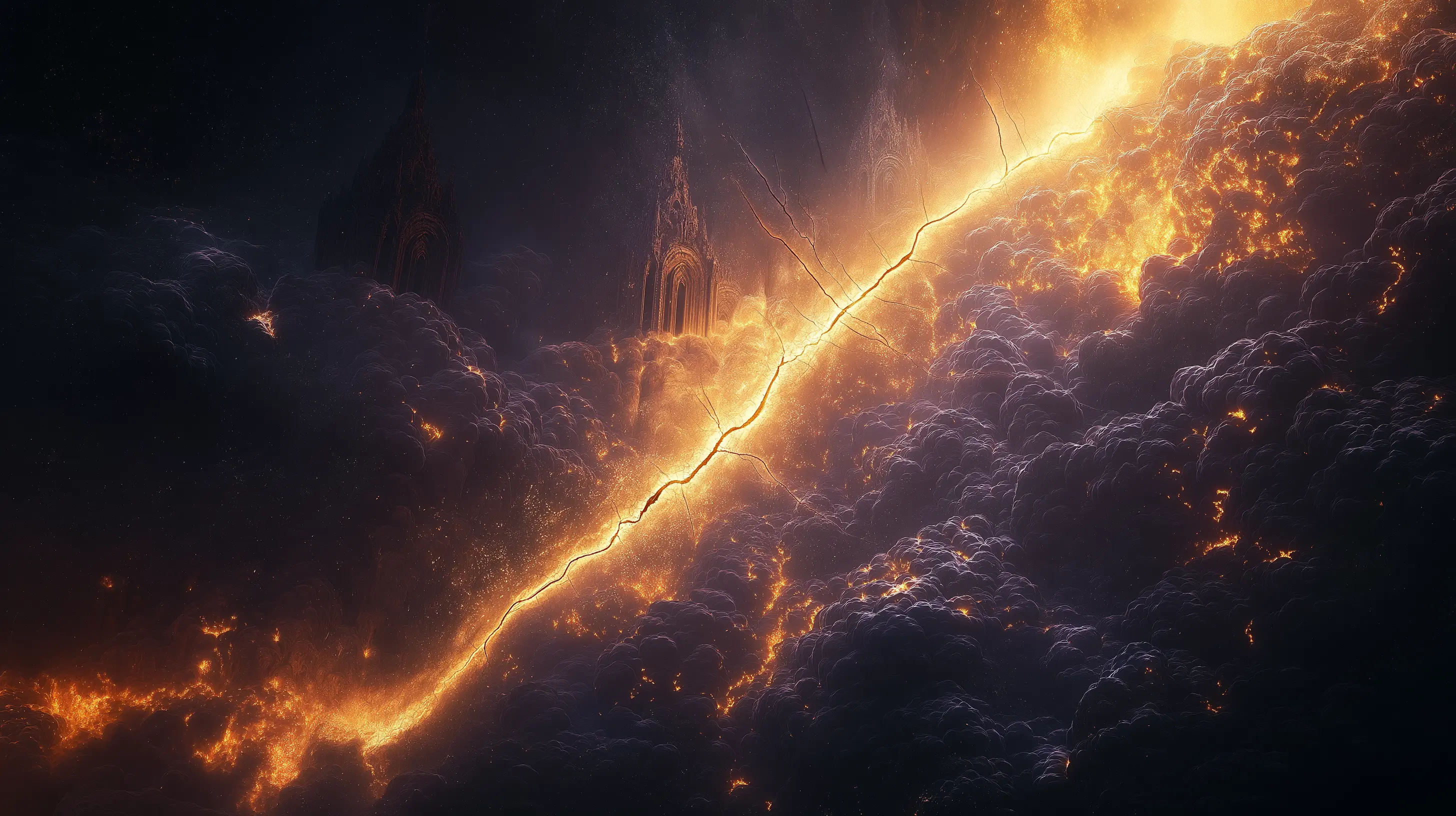

Most gothic settings in fantasy work the same way a black dress works at a party. The architecture says something serious is happening here. It signals mood without participating in it. The cathedral’s gargoyles and the dripping wax and the arched windows work because readers have learned to read them as atmosphere. Remove them and nothing changes except the lighting.
The Scar Cathedral in The Moon’s Shadow cannot be removed without removing the novel.
The Cathedral was not built. It generated itself, spontaneously, from the energy released when two Celestial Architects fractured their bond with enough force to collapse hundreds of Realms. It is made from crystallized grief and unspent divine power, which means it is made from the same material as the relationship at the book’s center. When Kael and Selene occupy it, they are not walking through a place that frames their story. They are walking through a physical record of what they did to each other.
This matters for a reason that has nothing to do with symbolism and everything to do with how the space functions narratively. The Cathedral is alive. It responds to their emotional states. When they are in accord, it stabilizes. Hallways stay where they were. Rooms hold their geometry. When they are in conflict, the architecture destabilizes. Corridors collapse. New hostile spaces generate. The Cathedral expresses what Kael and Selene cannot.
Two people sharing a space shaped by their unresolved damage. The space itself keeping a record of every moment they refuse to speak plainly. This is not metaphor. In the logic of the book, it is physics.
The locations inside the Cathedral are not scenic. Each one is a geography of confrontation.
The Wound Gallery is a corridor lined with mirrors, each showing a different version of the Sundering Event. Different choices, different outcomes, the same fracture arriving through different doors. Kael and Selene cannot walk past these without being forced to see, over and over, the moment their partnership broke. The Gallery does not allow avoidance. That is its architectural function. It also contains the Glyph of Negation, hidden in plain sight in a room built entirely to force witnesses to look away.
The Nave of First Things holds the Memory Mosaic, a living archive of every erased Realm. Every reality that no longer exists because of what they did. The gravity of their past in the most literal sense: a room full of loss that must be moved through rather than around.
The Forgework is underground. Magic Rot originates there, and the Soul Economy can be negotiated in its chambers. To fix what is breaking, they have to go into the part of the structure that is already the most damaged. There is no route to restoration that bypasses the wound.
None of these rooms are named for aesthetic reasons. They are named for what they demand of the people inside them.
What dark setting can do, when it’s working, is refuse the characters the option of neutrality.
A cathedral built from grief does not let its occupants pretend they are fine. A building that collapses when its inhabitants are in conflict cannot be ignored. The architecture makes the emotional state legible and consequential in the same moment. You cannot look away from what Kael and Selene have destroyed, because you are standing inside it.
The Scar Cathedral is also, in a structural sense, the third character in every scene. It has responses, inclinations, a form of memory. It is the place where forty-three years of unresolved history have been accumulating, taking on mass, pressing against the people who created it.
Most gothic fantasy settings function as weather. The Cathedral functions as witness.
There is a difference. The weather does not care what you did. A witness does not forget.